
As bath bombs passaram de um luxo de spa de nicho para uma diversão familiar convencional em apenas alguns anos. Basta percorrer qualquer corredor de loja para encontrar esferas efervescentes multicoloridas, comercializadas diretamente para crianças, com glitter, brinquedos surpresa e fragrâncias semelhantes a doces. Parecem irresistíveis — e é exatamente por isso que os pais devem parar e pensar antes de colocar uma na banheira.
Uma bubble bath bomb combina a ação efervescente de uma bath bomb tradicional com agentes tensioativos que produzem bolhas, criando uma experiência espumosa e efervescente que as crianças adoram. Mas há um ponto importante: nem todas as bath bombs são iguais. O que encanta os olhos de uma criança pode, discretamente, irritar a pele, desencadear alergias ou até representar riscos de ingestão para crianças pequenas curiosas.
Compreender o que distingue um produto genuinamente seguro para crianças de uma fórmula para adultos, inteligentemente comercializada e reembalada em cores vivas, pode poupar a sua família de reações desconfortáveis — e tornar a hora do banho no ritual alegre que deve ser.
Porque as Crianças Precisam de Bath Bombs Especialmente Formuladas
Como a Pele das Crianças Difere da Pele dos Adultos
A pele das crianças não é simplesmente uma versão menor da pele dos adultos. É estruturalmente diferente em aspetos que são extremamente importantes na escolha de produtos de banho.
A epiderme de uma criança — a camada protetora mais externa — é comprovadamente mais fina do que a de um adulto. Isto significa que as substâncias aplicadas na pele são absorvidas com maior facilidade e penetram mais profundamente. O que pode permanecer inofensivamente na pele de um adulto pode atravessar a barreira cutânea de uma criança e entrar na corrente sanguínea com maior eficiência.
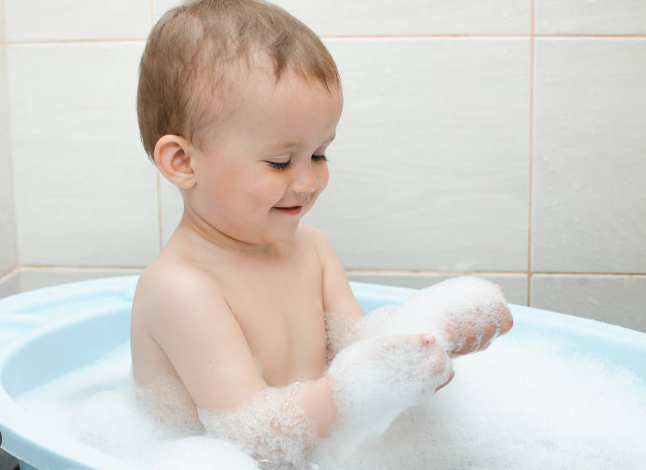
A pele jovem também produz menos sebo, o óleo natural que forma uma película protetora. Sem essa barreira lipídica robusta, a pele das crianças perde humidade mais rapidamente e reage de forma mais intensa a irritantes e alergénios. O pH da sua pele tende a ser mais próximo do neutro em comparação com o manto ligeiramente ácido que os adultos desenvolvem, o que significa menos defesa natural contra bactérias e alterações químicas.
Estas realidades biológicas não são notas de rodapé sem importância. São a base para perceber porque razão uma formulação suave para a pele é tão importante em qualquer produto que permaneça na água do banho com o seu filho durante 15 a 30 minutos.
Riscos Comuns da Utilização de Bath Bombs para Adultos em Crianças
Usar uma bath bomb padrão para adultos numa criança pode parecer inofensivo, mas os riscos são reais e bem documentados por dermatologistas pediátricos.
A irritação da pele lidera a lista. Fragrâncias sintéticas, surfactantes agressivos e óleos essenciais concentrados, concebidos para níveis de tolerância de adultos, podem causar vermelhidão, comichão e dermatite de contacto em crianças. Estas reações por vezes surgem horas após o banho, o que dificulta a identificação da causa.
As infeções do trato urinário são outra preocupação, sobretudo para meninas pequenas. A água do banho intensamente perfumada ou com corantes, que permanece em contacto com áreas sensíveis, pode perturbar o equilíbrio bacteriano natural e irritar os tecidos delicados. Os pediatras assinalam frequentemente os produtos de banho perfumados como um fator que contribui para ITU recorrentes na infância.
Depois, há o risco de ingestão. As bombas de banho parecem e cheiram a rebuçados para crianças pequenas. Os produtos que contêm corantes não seguros para consumo alimentar, substâncias químicas sintéticas ou pequenos objetos incorporados representam riscos reais se uma criança decidir dar uma dentada — e vai tentar.
Requisitos Essenciais dos Ingredientes para Bombas de Banho Seguras para Crianças
Ingredientes de Base Não Tóxicos
Todas as bombas de banho começam com a mesma química básica: bicarbonato de sódio e ácido cítrico. Quando estes dois entram em contacto com a água, produzem a reação efervescente de dióxido de carbono que torna as bombas de banho tão agradáveis. Parece simples — mas a qualidade varia enormemente.
Para bombas de banho não tóxicas destinadas a crianças, ambos os ingredientes devem cumprir, no mínimo, padrões de pureza de grau alimentar. O bicarbonato de sódio de grau alimentar contém menos contaminantes de metais pesados e resíduos de processamento do que as alternativas de grau industrial. O mesmo se aplica ao ácido cítrico — as versões de grau alimentar provenientes de fontes não OGM oferecem um perfil mais limpo.
Os ingredientes de grau cosmético situam-se num nível intermédio. São mais puros do que os de grau industrial, mas podem não cumprir os limites de contaminação mais rigorosos dos materiais de grau alimentar. Para um produto que se dissolve na água onde o seu filho se senta — e que pode engolir acidentalmente — o grau alimentar é a referência mais segura.
Listas de ingredientes transparentes não são opcionais neste caso. Se uma marca não lhe disser exatamente o que está no interior, esse é o primeiro sinal de alerta. Fabricantes reputados de ingredientes de banho seguros para crianças indicam todos os componentes, incluindo os corantes específicos e as fontes de fragrância utilizadas.
Normas de Formulação Suaves para a Pele
Para além da base efervescente, o que uma bomba de banho acrescenta à água determina se cuida ou agrava a pele jovem.
Sulfatos como o sodium lauryl sulfate (SLS) criam bolhas impressionantes, mas removem os óleos naturais da pele. Os parabenos preservam o prazo de validade, mas continuam envolvidos em debate sobre desregulação endócrina. Os corantes sintéticos tornam a água digna de Instagram, mas não oferecem qualquer benefício para a pele e apresentam potencial de irritação. Uma fórmula genuinamente centrada na criança evita os três.
Em vez disso, procure hidratantes naturais que protejam a barreira cutânea. O óleo de coco proporciona hidratação suave sem obstruir os poros. A manteiga de karité fornece vitaminas A e E enquanto cria uma camada protetora macia. A aveia coloidal acalma a pele reativa. Estes ingredientes transformam a hora do banho num momento de nutrição da pele, em vez de um momento que agride a pele.
Verá frequentemente o termo "hipoalergénico" em produtos de banho para crianças. Eis o que os pais devem saber: na maioria dos mercados, "hipoalergénico" não tem uma definição legal rigorosa. Em geral, significa que o produto foi formulado para minimizar alergénios comuns, mas não garante ausência total de reação em todas as crianças. Os verdadeiramente fiáveis bubble bombs hipoalergénicos sustentam essa alegação com dados de testes clínicos de contacto e certificações livres de alergénios.
Escolhas Seguras de Fragrâncias e Cores
A fragrância é um dos pontos em que muitas bath bombs para crianças falham discretamente os padrões de segurança. Uma única menção de "fragrance" no rótulo dos ingredientes pode ocultar dezenas de substâncias químicas sintéticas, algumas das quais são sensibilizantes conhecidos.
Existem óleos essenciais adequados para crianças, mas a lista é mais curta do que muitas marcas sugerem. Lavanda e camomila são geralmente bem toleradas por crianças com mais de dois anos, quando usadas em diluições adequadas. Laranja-doce e tangerina oferecem aromas alegres com baixo potencial de irritação. No entanto, óleos como hortelã-pimenta, eucalipto, tea tree e canela podem irritar a pele jovem ou causar sensibilidade respiratória — especialmente em crianças com menos de seis anos.
A concentração é extremamente importante. Os produtos para adultos podem usar óleos essenciais numa concentração de 2-3%. Para crianças, os dermatologistas recomendam normalmente manter-se abaixo de 0.5-1%, dependendo do óleo específico e da idade da criança. Mais não significa melhor quando estão envolvidos corpos pequenos.
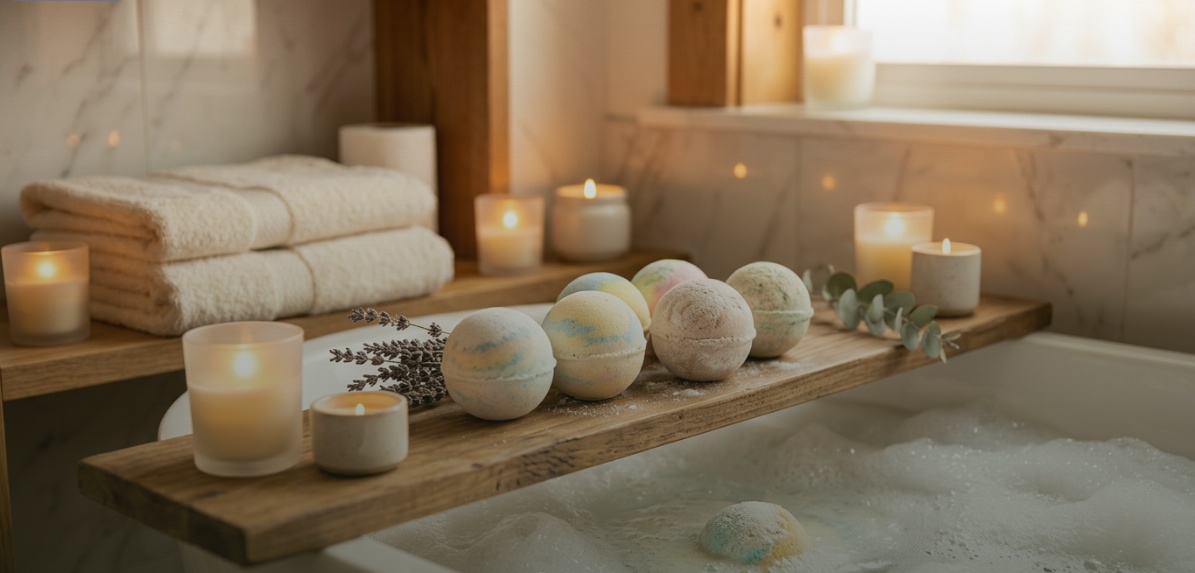
No que diz respeito à cor, alternativas naturais como pó de beterraba, spirulina, curcuma e minerais de argila dão tonalidade à água sem o potencial de irritação dos corantes sintéticos como as cores FD&C. A contrapartida? Os corantes naturais produzem tons mais suaves e menos vibrantes. Muitos pais consideram que essa é uma troca que vale a pena pela tranquilidade que proporciona.
Procure certificações de entidades reconhecidas que verifiquem ingredientes de banho seguros para crianças — organizações como COSMOS, EWG Verified ou endossos específicos de dermatologia pediátrica têm mais peso do que rótulos "naturais" atribuídos pela própria marca.
Design Físico e Características de Segurança
Considerações sobre Tamanho e Forma
Os ingredientes não são o único fator de segurança. O design físico de uma bath bomb é mais importante do que a maioria dos pais imagina.
Para crianças com menos de três anos, qualquer objeto que caiba totalmente dentro de um tubo de papel higiénico é considerado um potencial risco de asfixia. Mini bath bombs, "crumbles" de bath bomb e produtos com pequenos brinquedos incorporados enquadram-se claramente nesta zona de perigo. A criança não precisa de comer a bath bomb inteira — um pedaço que se solte durante o manuseamento pode ficar alojado numa garganta pequena.
O tamanho adequado varia com a idade. As bath bombs seguras para crianças pequenas devem ser grandes o suficiente para impedir a colocação na boca — pense no tamanho de uma bola de ténis ou maior. Para crianças com quatro anos ou mais, tamanhos ligeiramente menores tornam-se aceitáveis, mas as surpresas no interior devem continuar a ser grandes, lisas e claramente não comestíveis.
A forma também desempenha um papel. Bath bombs lisas e arredondadas dissolvem-se de forma mais previsível do que formatos de fantasia com secções finas salientes que podem partir-se e transformar-se em peças pequenas. Um design simples é um design mais seguro.
Velocidade de Dissolução e Temperatura da Água
Uma bath bomb que entra em efervescência de forma violenta e rápida pode parecer dramática, mas não é ideal para banhos de crianças. A dissolução rápida concentra os ingredientes depressa, podendo criar momentaneamente zonas de elevada concentração de fragrância ou tensioativos em contacto com a pele.
Uma efervescência controlada e gradual — dissolvendo-se ao longo de 3 a 5 minutos — distribui os ingredientes de forma mais uniforme pela água do banho. Esta libertação mais suave também prolonga o valor de entretenimento, dando às crianças mais tempo para desfrutar do efeito sem sobrecarregar a pele sensível.
A temperatura da água afeta tanto a criança como o produto. As orientações pediátricas recomendam água do banho entre 37-38°C (98-100°F) para crianças. A água mais quente acelera a dissolução da bath bomb e pode intensificar a libertação da fragrância, ao mesmo tempo que abre os poros da pele e aumenta a absorção do que estiver na água. Manter as temperaturas dentro do intervalo recomendado garante que o produto funciona conforme testado e que a pele da criança se mantém protegida.
Normas Regulamentares e Certificações a Procurar
Principais Certificações de Segurança
"Testado por dermatologistas" soa tranquilizador, mas o que significa realmente? Na maioria dos casos, indica que um dermatologista supervisionou ou analisou testes cutâneos em voluntários humanos. Não significa necessariamente que o produto tenha passado com zero reações — apenas que os testes foram realizados. "Aprovado por dermatologistas" tem um peso ligeiramente maior, implicando resultados positivos.
"Recomendado por pediatras" segue uma lógica semelhante. Significa que pelo menos um pediatra endossou o produto, mas os critérios para obter essa designação variam. Procure detalhes específicos: foi testado especificamente na pele de crianças ou apenas em adultos?
Os enquadramentos regulamentares fornecem limites mais rigorosos. Na União Europeia, os produtos cosméticos devem cumprir o Regulamento (CE) 1223/2009, que exige avaliações de segurança, listas de substâncias restritas e rotulagem adequada. Nos Estados Unidos, a FDA regula as bath bombs como cosméticos, exigindo ingredientes seguros e rotulagem precisa, mas não aprovação prévia à comercialização. Saber em que ambiente regulamentar um produto foi formulado ajuda a avaliar o seu padrão base de segurança.
Testes por Terceiros e Transparência
O padrão-ouro de confiança é o teste laboratorial independente, realizado por terceiros. Isto significa que um laboratório sem qualquer ligação financeira à marca verificou as alegações de segurança do produto, a pureza dos ingredientes e a estabilidade microbiana.
As Fichas de Dados de Segurança (SDS) estão publicamente disponíveis para a maioria dos ingredientes cosméticos e produtos acabados. Embora sejam documentos técnicos, os pais podem consultá-las para verificar classificações de perigo, índices de irritação cutânea e dados de toxicidade. Uma marca que fornece prontamente estes documentos ou disponibiliza links para os mesmos demonstra confiança na sua formulação.
Atualmente, várias marcas publicam transparência total dos ingredientes nos seus websites — não apenas a informação obrigatória do rótulo, mas também detalhes sobre a origem, intervalos de concentração e resultados de testes. Este nível de transparência está a tornar-se um fator diferenciador no mercado, e com razão. Os pais estão atentos.
Como Avaliar uma Bomba de Banho de Espuma para Crianças Antes de Comprar
Ler Rótulos Como um Profissional
Não precisa de um curso de química para identificar ingredientes problemáticos. Uma lista curta de sinais de alerta abrange a maioria das preocupações:
- Fragrance/Parfum — um termo genérico que pode ocultar dezenas de substâncias químicas não divulgadas
- SLS/SLES — tensioativos agressivos que removem a proteção natural da pele jovem
- Parabenos (methylparaben, propylparaben) — conservantes que continuam a suscitar debates de segurança
- Corantes sintéticos (FD&C, D&C numbers) — corantes desnecessários com potencial de irritação
- Phthalates — plastificantes por vezes ocultos em misturas de fragrâncias
Tenha cautela com alegações de marketing como "natural" e "organic". Estes termos não têm definições regulamentares rigorosas na maioria dos mercados cosméticos. Um produto pode ser rotulado como "natural" mesmo contendo apenas uma pequena percentagem de ingredientes de origem natural. Procure certificações específicas (USDA Organic, COSMOS Natural) em vez de confiar em alegações não verificadas no rótulo.
Verifique sempre as recomendações de idade. Um produto rotulado como "adequado para idades 6+" não deve ser usado no banho de uma criança de três anos, independentemente de quão suave pareça.
O Protocolo do Teste de Contacto
Mesmo o produto com aparência mais segura merece um teste de contacto antes da utilização completa no banho, especialmente para crianças com pele sensível ou reativa.
Eis o processo simples: dissolva um pequeno pedaço da bomba de banho num copo de água morna. Aplique uma pequena quantidade dessa água na parte interna do antebraço da criança ou atrás da orelha. Aguarde 24 horas. Se não surgirem vermelhidão, comichão, borbulhas ou irritação, é provável que o produto seja seguro para utilização no banho completo.
Consulte o seu pediatra antes de introduzir bombas de banho se a sua criança tiver eczema, psoríase ou histórico de alergias de contacto. Algumas condições exigem precaução adicional, mesmo com produtos comercializados como suaves.
Após qualquer utilização de bomba de banho, esteja atento a reações tardias: vermelhidão que surge horas depois, aumento da comichão à hora de deitar ou queixas de ardor ao urinar. Estes sinais sugerem que o produto não é adequado para a sua criança, mesmo que o teste de contacto tenha parecido normal.
Perguntas Frequentes
A partir de que idade as crianças podem usar bombas de banho com espuma em segurança?
A maioria dos dermatologistas pediátricos sugere esperar, no mínimo, até aos três anos de idade, utilizando produtos especificamente formulados para crianças. Antes dos três anos, a barreira cutânea do bebé ainda está em desenvolvimento e é mais vulnerável à irritação. Para crianças entre os três e os seis anos, escolha produtos com fragrância mínima, sem peças pequenas e com fórmulas suaves comprovadas. Supervisione sempre a hora do banho, independentemente da idade.
As bombas de banho são seguras para crianças com eczema ou pele sensível?
As crianças com eczema ou pele sensível podem usar bombas de banho, mas a seleção exige cuidado adicional. Procure opções sem fragrância e com hidratantes adicionados, como aveia coloidal ou manteiga de karité. Evite qualquer produto que contenha óleos essenciais, corantes sintéticos ou sulfatos. Faça um teste de contacto 48 horas antes da utilização completa e consulte o dermatologista da sua criança para obter orientação personalizada. Algumas crianças com crises ativas de eczema devem evitar totalmente as bombas de banho até que a pele acalme.
Os corantes das bombas de banho podem manchar a pele ou as banheiras?
Os corantes sintéticos podem manchar temporariamente tanto a pele como superfícies porosas da banheira, sobretudo banheiras acrílicas de cor clara ou de esmalte mais antigo. As manchas na pele normalmente desaparecem em poucas horas com uma lavagem suave. No caso das banheiras, enxaguar prontamente após escoar a água costuma evitar marcas permanentes. Corantes naturais, como beterraba ou curcuma, também podem manchar, mas geralmente saem com mais facilidade na lavagem. Se isso for uma preocupação para si, escolha opções sem corantes ou faça primeiro um teste num pequeno recipiente com água.
Com que frequência as crianças podem usar bombas de banho sem irritar a pele?
Para a maioria das crianças, um a dois banhos com bomba de banho por semana é um limite razoável. O uso diário — mesmo com fórmulas suaves — pode comprometer gradualmente a barreira natural de hidratação da pele e o equilíbrio do pH. Alterne as noites com bomba de banho com banhos apenas de água ou com um produto de limpeza simples e sem fragrância. Se notar secura, vermelhidão ou comichão a surgir ao longo do tempo, reduza ainda mais a frequência e aplique um hidratante suave após cada banho.
O que devo fazer se o meu filho ingerir acidentalmente parte de uma bomba de banho?
Se o seu filho engolir uma pequena quantidade de uma bomba de banho feita com ingredientes de qualidade alimentar, não entre em pânico. Enxague a boca com água limpa e ofereça uma bebida para diluir a substância. O bicarbonato de sódio e o ácido cítrico em pequenas quantidades normalmente causam apenas um ligeiro desconforto no estômago. No entanto, se o produto contiver químicos sintéticos, óleos essenciais ou ingredientes desconhecidos — ou se o seu filho apresentar sintomas como vómitos, dificuldade em respirar ou inchaço — contacte o Centro de Informação Antivenenos ou procure assistência médica imediata. Guarde a embalagem do produto para referência.
As bombas de banho caseiras são mais seguras para crianças do que as compradas em loja?
As bombas de banho caseiras dão-lhe controlo total sobre os ingredientes, o que é uma vantagem real. Pode selecionar bases de qualidade alimentar, eliminar totalmente as fragrâncias e evitar corantes sintéticos. No entanto, caseiro não significa automaticamente mais seguro. Sem conhecimentos adequados de formulação, poderá usar óleos essenciais em concentrações inseguras ou criar produtos com taxas de dissolução inconsistentes. As opções compradas em loja, de marcas reputadas, passam por testes de estabilidade e controlo de qualidade que as cozinhas domésticas não conseguem reproduzir. A abordagem mais segura é comprar a marcas transparentes e certificadas ou fazer as suas próprias bombas de banho com receitas simples e cuidadosamente estudadas.
Tornar a Hora do Banho Divertida e Segura
Escolher uma bomba de banho com espuma verdadeiramente adequada para crianças resume-se a quatro pilares inegociáveis: ingredientes não tóxicos com pureza de qualidade alimentar, formulação suave para a pele sem químicos agressivos, design físico apropriado à idade e certificações de segurança verificadas por testes independentes.
Nada disto significa que a hora do banho tenha de ser aborrecida. O mercado de produtos de banho genuinamente seguros para crianças cresceu enormemente, e os pais têm agora opções reais que oferecem efervescência, cor e diversão sem comprometer a saúde. Só precisa de saber o que procurar — e o que deve deixar na prateleira.
Uma bomba de banho segura transforma uma rotina quotidiana num momento de ligação e alegria. O seu filho desfruta da magia das cores em espiral e das bolhas efervescentes. E você tem a tranquilidade de saber exatamente o que está naquela água. Essa é uma combinação que vale a pena procurar.