
O shampoo sólido passou discretamente de um produto ecológico de nicho para um item básico nas prateleiras. O interesse de busca por cuidados capilares sem plástico continua crescendo, e o cabelo oleoso é uma dessas categorias problemáticas persistentes para as quais os consumidores pagam repetidamente para resolver.
Essa combinação torna as fórmulas para couro cabeludo oleoso um nicho atraente para marcas e varejistas. Neste guia, vamos analisar a ciência, revisar as barras populares já disponíveis no mercado e mostrar como uma abordagem de sourcing mais inteligente pode preencher as lacunas deixadas por esses produtos.
Por que o cabelo oleoso precisa de um shampoo sólido especializado
O cabelo oleoso não é apenas um incômodo — é um sinal fisiológico. As glândulas sebáceas do couro cabeludo produzem sebo em excesso, e uma barra genérica raramente aborda o equilíbrio subjacente. A maioria das barras "multiuso" ou limpa de forma excessivamente agressiva, desencadeando um efeito rebote de oleosidade, ou deixa uma película que agrava o problema.
A ciência do couro cabeludo oleoso e do controle do sebo
O sebo é produzido por glândulas associadas a cada folículo capilar. Sua produção é impulsionada por andrógenos, de modo que alterações hormonais, estresse, dieta e até a umidade podem aumentar esse volume. A lavagem excessiva é uma forma comum de autossabotagem: limpe demais o couro cabeludo e ele compensará produzindo mais oleosidade.
O controle eficaz do sebo não se resume a uma limpeza agressiva. Trata-se de remover suavemente o excesso de óleo, preservando a barreira do couro cabeludo intacta — e é exatamente aí que a seleção de ingredientes mais importa.
O que torna um shampoo sólido "adequado" para couro cabeludo oleoso
Uma barra bem formulada para cabelo oleoso geralmente atende a estes critérios:
Propriedades de limpeza profunda — removem o acúmulo de produtos e o sebo oxidado.
Base sem sulfatos ou com surfactantes suaves — limpa sem remover agressivamente a oleosidade natural.
pH equilibrado — idealmente 4,5–5,5 para manter a barreira do couro cabeludo em equilíbrio.
Agentes naturais absorventes — argila, carvão e botânicos que absorvem a oleosidade.
Principais Ingredientes Que Controlam a Oleosidade no Shampoo Sólido
Compradores e usuários finais leem cada vez mais as listas de ingredientes. Saber quais ativos realmente fazem o trabalho — e quais são apenas conteúdo de marketing — protege a credibilidade da sua marca.
Agentes Clarificantes e Absorventes de Sebo
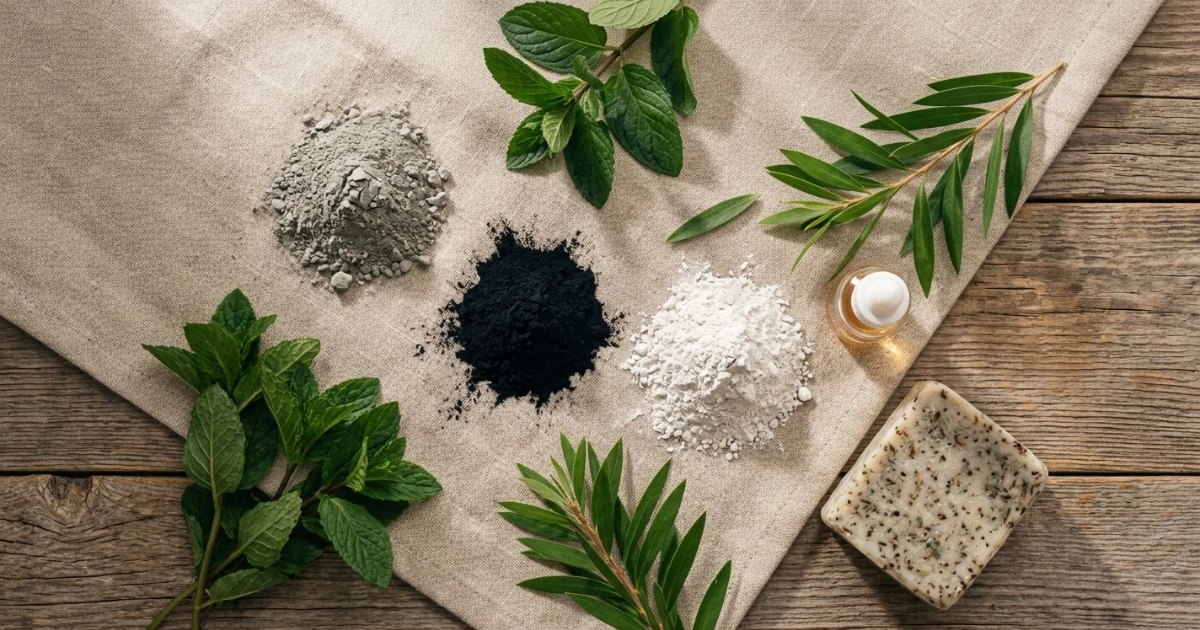
Argilas bentonita e caulim são os principais desta categoria. A bentonita possui carga negativa que se liga a óleos e impurezas com carga positiva, enquanto o caulim é mais suave e adequado para cabelos finos. O carvão ativado proporciona uma limpeza profunda, e o vinagre de maçã ajuda a reacidificar o couro cabeludo para que as cutículas fiquem alinhadas.
Botânicos e Limpadores Sem Sulfatos
Melaleuca e hortelã-pimenta oferecem um efeito refrescante e antimicrobiano ao qual couros cabeludos oleosos respondem bem. O alecrim é popular por seus benefícios para a circulação e a saúde do couro cabeludo. Na parte de limpeza, surfactantes mais suaves, como o sodium cocoyl isethionate (SCI), produzem uma espuma rica sem a sensação de repuxamento deixada pelos sulfatos — um dos principais motivos pelos quais o segmento de barras de shampoo sem sulfatos continua crescendo.
Ingredientes a Evitar
| Ingrediente | Por que é um Problema para Cabelos Oleosos |
|---|---|
| Manteigas vegetais pesadas (karité, cacau) | Deixam o cabelo pesado e podem deixar uma película oleosa |
| Silicones (dimethicone) | Acumulam-se ao longo do tempo, retendo óleo e deixando o cabelo sem brilho |
| Sulfatos agressivos (SLS) | Removem a oleosidade em excesso, desencadeando a produção compensatória de sebo |
| Óleos carreadores pesados (coco em excesso) | Revestem o couro cabeludo e comprometem os objetivos de limpeza profunda |
Principais barras de shampoo populares para cabelos oleosos avaliadas
Aqui está uma análise honesta dos estilos de barras que dominam o mercado atualmente. Compreender seus prós e contras ajuda você a identificar onde um produto melhor pode se destacar.
Tabela comparativa: barras de shampoo populares para cabelos oleosos
| Tipo de produto | Ingredientes principais | Vantagens | Desvantagens | Ideal para |
|---|---|---|---|---|
| À base de carvão | Carvão ativado, surfactantes de coco | Limpeza profunda, apelo detox | Pode ressecar as pontas, deixar resíduos escuros em cabelos claros | Couros cabeludos muito oleosos e com acúmulo de produtos |
| À base de argila | Bentonita, caulim | Excelente absorção de oleosidade | Pesa se for excessivamente formulado | Cabelo fino e oleoso |
| Vinagre de cidra de maçã | ACV, tensoativos suaves | Reequilibra o pH, confere brilho | Fragrância polarizadora, espuma inconsistente | Couros cabeludos propensos a acúmulo |
| Melaleuca & botânicos | Melaleuca, hortelã-pimenta, alecrim | Antimicrobiano, sensação fresca e refrescante | Pode causar formigamento ou ressecar couros cabeludos sensíveis | Couros cabeludos com coceira e oleosos |
| Suave e sem sulfatos | SCI, SLSA | Suave, ecológico e seguro para a família | Pode ter desempenho inferior em cabelos muito oleosos | Couros cabeludos sensíveis e moderadamente oleosos |
A barra clarificante à base de carvão
O carvão é um favorito do marketing porque "detox" vende. Ele realmente absorve oleosidade e impurezas, mas fórmulas excessivamente fortes podem exagerar e deixar o cabelo ressecado e áspero — e barras mais escuras às vezes podem manchar cabelos claros ou descoloridos.
A barra de controle de sebo à base de argila
A argila é, sem dúvida, o absorvente de oleosidade mais confiável. O desafio é o equilíbrio. Argila em excesso faz a barra arrastar nos fios, deixando uma sensação esbranquiçada e pesada. As proporções da formulação fazem toda a diferença neste estilo.
A barra de vinagre de maçã
As barras com vinagre de maçã restauram a acidez e aumentam o brilho, algo que cabelos oleosos apreciam. As desvantagens são práticas — o cheiro não agrada a todos, e a espuma pode ser rala, o que frustra usuários acostumados com shampoo em frasco.
A barra de melaleuca & botânicos
Essas barras se apoiam em ativos antimicrobianos e proporcionam sensação refrescante no couro cabeludo. Mas a potência tem dois lados: uma dose alta de tea tree pode arder ou ressecar em excesso, especialmente em pele já irritada.
A Barra Suave Sem Sulfatos
Uma escolha sólida para o público sensível e consciente do meio ambiente, além de um bom limpador natural para os cabelos. A limitação honesta é o poder de limpeza — em couros cabeludos realmente oleosos, as fórmulas mais suaves às vezes exigem uma segunda lavagem.
Fraquezas Comuns em Produtos do Mercado
Ao analisar a categoria, as mesmas lacunas continuam surgindo:
Inconsistência entre lotes — fabricantes menores têm dificuldade para manter fórmulas idênticas de um lote para outro.
Espuma fraca — um dos principais motivos de abandono por usuários de barras pela primeira vez.
Vida útil curta — barras macias que se dissolvem rapidamente ou ficam rançosas.
Suporte limitado para marca própria — difícil escalar além de uma marca de hobby.
Sem personalização real — você fica preso ao que o fabricante já vende.
Uma Escolha Mais Inteligente: Barras de Shampoo Sob Medida com Boymay
A melhor barra de shampoo purificante não obriga você a escolher uma virtude em detrimento das demais. Quando bem formulada, uma única barra pode combinar a capacidade de absorção da argila com a limpeza profunda do carvão ativado, suavizá-la com botânicos e ainda permanecer sem sulfatos — tudo com qualidade consistente de padrão industrial.
Como a Boymay combina o melhor de cada fórmula
Por meio da fabricação OEM\/ODM, as marcas podem combinar os pontos fortes acima em uma fórmula equilibrada, em vez de escolher entre eles. Isso significa ajustar as proporções de argila para que o cabelo não fique pesado, calibrar os níveis de tea tree para refrescar sem causar ardor e garantir uma barra estável, com pH equilibrado, que resista ao transporte e ao tempo de prateleira.
Por que empreendedores e PMEs confiam na Boymay
Desde 1995, a Boymay é especializada na fabricação OEM\/ODM de bath bombs, shower steamers e produtos de cuidados pessoais. A operação conta com uma instalação de 40,000㎡ com 16 linhas de produção automatizadas, respaldada por certificações GMP, ISO, FDA e SMETA reconhecidas internacionalmente — o tipo de credencial que varejistas e marketplaces exigem cada vez mais antes de aceitarem uma marca em seu portfólio.
Tabela de comparação: produtos prontos para uso vs. marca própria Boymay
| Fator | Barras típicas do mercado | Boymay OEM\/ODM |
|---|---|---|
| Personalização | Receitas fixas e predefinidas | Fórmulas totalmente personalizadas & fragrâncias |
| Flexibilidade de MOQ | Rígido ou indisponível | Escalável para a sua fase de crescimento |
| Certificações | Frequentemente não verificadas | GMP, ISO, FDA, SMETA |
| Consistência da fórmula | Varia de lote para lote | Controlo automatizado da linha |
| Branding | Limitado ou genérico | Embalagem completa com marca própria |
| Escalabilidade | Com gargalos | 16 linhas de produção |
Do conceito à prateleira: o processo de fabricação personalizada
Consultoria — compartilhe seu mercado-alvo, posicionamento e faixa de preço.
Formulação — a equipe de P&D desenvolve uma barra alinhada aos seus objetivos de controle da oleosidade.
Amostragem — você testa, ajusta e aprova antes de assumir o compromisso.
Produção — linhas automatizadas entregam lotes consistentes e em conformidade.
Embalagem de marca própria — personalizada com a sua marca e pronta para a prateleira ou para listagem online.
Como escolher o fornecedor certo de shampoo em barra
A aquisição é onde muitos fundadores iniciantes cometem erros. Algumas verificações evitam equívocos custosos mais tarde.
Checklist de certificações e conformidade
A GMP confirma práticas disciplinadas de higiene na fabricação. A ISO indica sistemas de qualidade padronizados. O registro na FDA é importante para o acesso ao mercado dos EUA, e a SMETA abrange trabalho ético e fornecimento responsável — uma exigência crescente para grandes varejistas. Solicite documentação, não apenas logotipos em um site.
Avaliando a Personalização da Fórmula e o MOQ
Investigue até que ponto um fornecedor realmente fará alterações. Ele pode ajustar surfactantes, percentuais de ativos, fragrância e formato? Depois, alinhe as quantidades mínimas de pedido ao seu volume realista de vendas — MOQs flexíveis permitem testar o mercado sem comprometer caixa em estoque encalhado.

Conclusão Final: Transforme a Demanda por Cabelos Oleosos em um Produto Vencedor
O nicho de cabelos oleosos continua crescendo, mas a maioria dos produtos no mercado deixa lacunas claras — qualidade inconsistente, pouca espuma e sem espaço para construção de marca. Essa lacuna é a sua oportunidade.
Parceria com um fabricante experiente permite lançar uma barra que combina o melhor de cada fórmula enquanto corrige o que os concorrentes fazem errado. Se você estiver pronto para desenvolver um shampoo sólido de destaque para couro cabeludo oleoso, entre em contato com a equipe Boymay para iniciar a conversa.
Perguntas Frequentes
P: As barras de shampoo realmente funcionam para cabelos oleosos?
R: Sim — com a fórmula purificante certa. Barras formuladas com argila, carvão ou ACV removem o excesso de sebo de forma eficaz, muitas vezes tão bem quanto, ou melhor do que, shampoos líquidos purificantes.
P: As barras de shampoo sem sulfato são fortes o suficiente para couros cabeludos oleosos?
R: Podem ser. Tensoativos suaves modernos como o SCI produzem uma espuma satisfatória e removem a oleosidade sem o efeito agressivo de remoção que desencadeia oleosidade rebote — a chave é uma formulação bem equilibrada.
P: Com que frequência alguém com cabelo oleoso deve usar uma barra de shampoo purificante?
R: A maioria das pessoas com couro cabeludo oleoso se sai bem lavando o cabelo a cada um ou dois dias. Uma barra purificante mais forte pode ser necessária apenas algumas vezes por semana, alternada com uma lavagem mais suave para evitar limpeza excessiva.
P: Posso criar uma barra de shampoo personalizada com a minha marca para a minha empresa?
R: Absolutamente. Os serviços OEM/ODM e de marca própria da Boymay permitem desenvolver uma fórmula e embalagem exclusivas que levam a sua marca, e não a de outra pessoa.
P: Qual é a quantidade mínima de encomenda para barras de marca própria?
R: Os MOQs são flexíveis e adaptados ao seu estágio de crescimento. Entre em contato com os detalhes do seu projeto e a equipe poderá apresentar opções adequadas tanto a um orçamento de startup quanto a lançamentos em maior escala.