
Trabalho para uma empresa de fabrico de bombas de banho, por isso perguntam-me constantemente: "O que é que uma bomba de banho contém realmente?" Pareceu-me que era altura de alguém que lida diariamente com estes materiais explicar cada ingrediente.
Quer tenha curiosidade sobre aquilo em que está a mergulhar ou esteja a pensar experimentar uma receita caseira de bomba de banho em casa, esta explicação abrange tudo o que precisa de saber.
Os Ingredientes Essenciais de que Toda Bomba de Banho Precisa
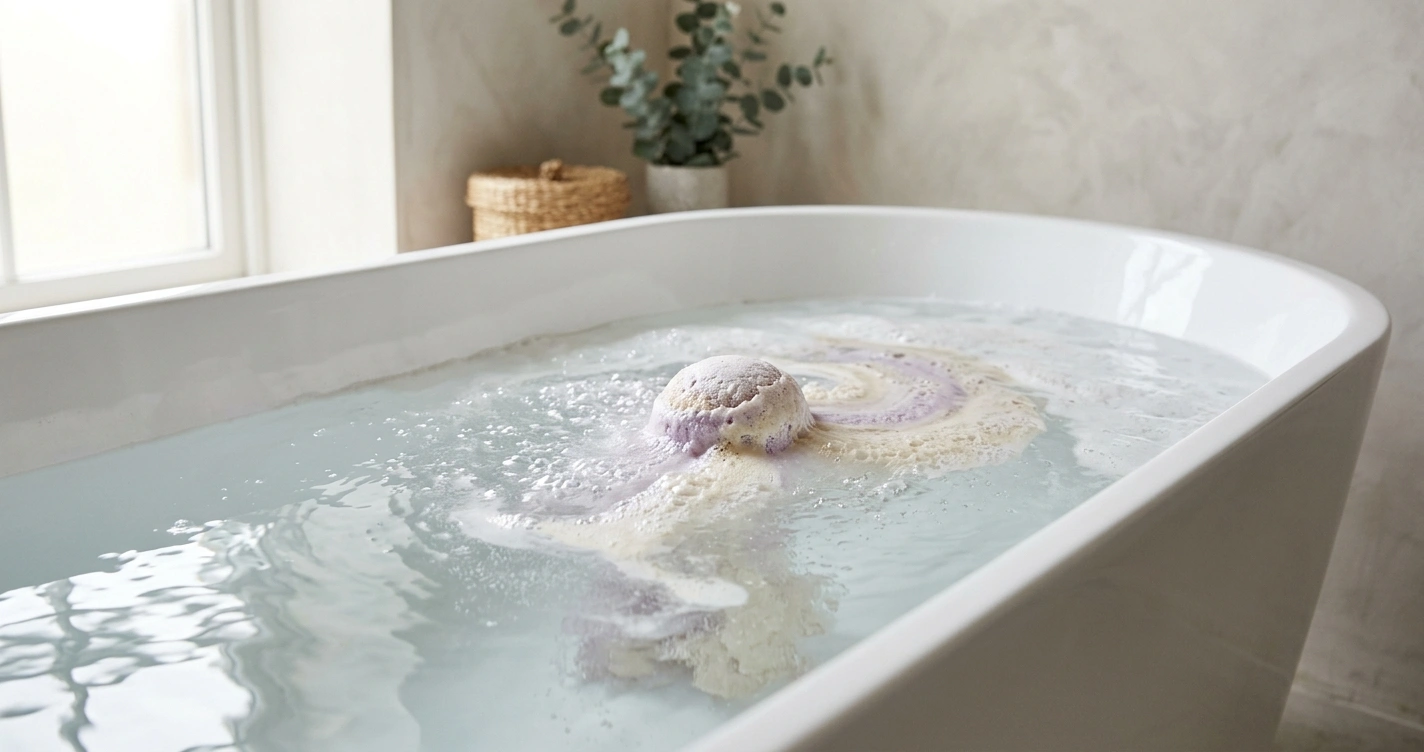
Na sua essência, toda bomba de banho baseia-se numa simples reação química ácido-base. Quando a coloca na água, dois ingredientes secos entram em contacto com a humidade e reagem — libertando dióxido de carbono. É isso que provoca a efervescência. É isso a magia. E tudo se resume a dois simples ingredientes de despensa.
Bicarbonato de Sódio — A Base de Toda Bomba de Banho
O bicarbonato de sódio é a base de tudo o que fabricamos. É a parte alcalina da nossa equação de efervescência. Para além de criar essa reação, o bicarbonato de sódio é naturalmente suave para a pele — amacia a água e pode ajudar a aliviar irritações ligeiras.
Na minha experiência, a proporção de bicarbonato de sódio é extremamente importante. Em excesso, a bomba de banho deixa um resíduo branco e calcário na banheira. Em quantidade insuficiente, a efervescência desaparece de forma dececionantemente rápida. Acertar neste ponto exigiu várias rondas de testes até chegarmos à fórmula certa.
Ácido Cítrico — O Fator de Efervescência
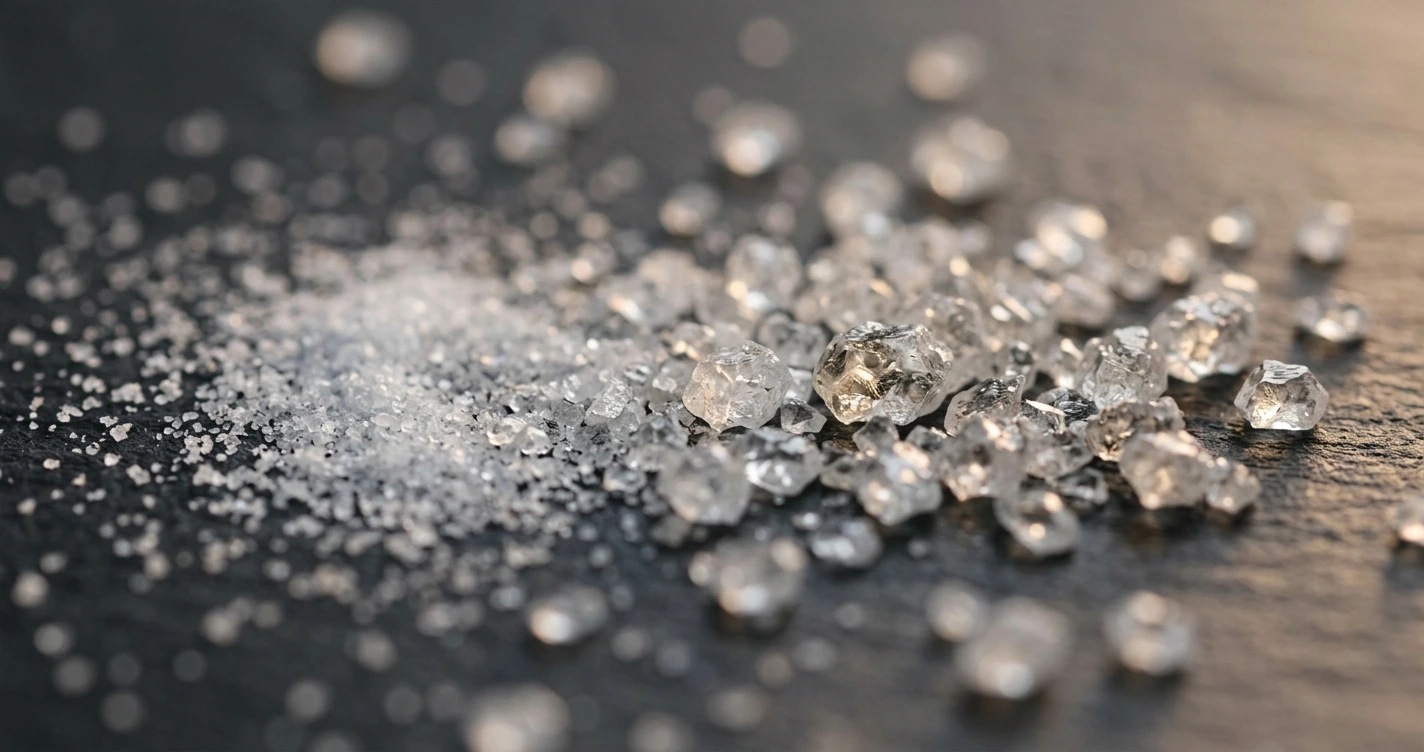
O ácido cítrico é o elemento ácido da fórmula. É naturalmente derivado de frutos cítricos, embora o pó de qualidade alimentar que utilizamos seja produzido por fermentação. Quando o ácido cítrico entra em contacto com o bicarbonato de sódio na água, a reação produz as bolhas satisfatórias de que todos gostam.
Eis algo de que a maioria das pessoas não se apercebe: o tamanho do grânulo importa. O ácido cítrico de grão fino mistura-se de forma mais uniforme e produz uma efervescência mais suave e consistente. Grânulos grossos podem criar uma textura irregular e, por vezes, fazer com que a bomba se ative de forma desigual. Nós moemos sempre o nosso até obter uma consistência específica.
A Proporção Áurea Entre Estes Dois
A proporção padrão com que trabalhamos é 2:1 — duas partes de bicarbonato de sódio para uma parte de ácido cítrico. Este equilíbrio proporciona uma efervescência vigorosa que dura vários minutos sem deixar resíduos granulados.
Já vi pessoas experimentarem proporções de 3:1 ou 1:1. Uma mistura 3:1 efervesce pouco e tem uma textura pulverulenta. Uma proporção de 1:1 efervesce de forma agressiva, mas pode irritar peles sensíveis devido à acidez extra. Voltamos sempre a esse ponto ideal de 2:1.
Agentes Ligantes Que Mantêm Tudo Unido
Aqui está a questão — se apenas comprimir bicarbonato de sódio e ácido cítrico juntos, o resultado será uma mistura esfarelada. É necessário algo para ligar os pós secos numa forma sólida que resista ao transporte, ao armazenamento e àquela entrada dramática na sua banheira. É aqui que entram os óleos e os agentes ligantes líquidos. São ingredientes essenciais para bombas de banho DIY que os principiantes por vezes ignoram.
Óleos Veiculares (Coco, Amêndoas Doces, Jojoba)
Os óleos veiculares desempenham uma dupla função nas nossas fórmulas. Ligam os pós entre si E proporcionam hidratação nutritiva para a pele quando a bomba se dissolve. O óleo certo altera completamente o caráter do produto final.
Após anos a trabalhar com diferentes opções, eis como eu dividiria as escolhas mais comuns:
Comparação de Óleos Veiculares
| Tipo de Óleo | Sensação na Pele | Estabilidade de Armazenamento | Ideal para |
|---|---|---|---|
| Óleo de Coco | Rico, hidratante | Moderado | Fórmulas para pele seca |
| Óleo de Amêndoas Doces | Leve, sedoso | Bom | Bombas de banho para uso diário |
| Óleo de Jojoba | Não oleoso, equilibrado | Excelente | Pele sensível |
| Óleo de Abacate | Intenso, nutritivo | Moderado | Fórmulas de luxo |
Pessoalmente, recorro ao óleo de amêndoas doces com mais frequência. É versátil, é bem absorvido e não sobrecarrega o perfil da fragrância.
Hamamélis ou Álcool Isopropílico como Agente Ligante em Spray
Este é o truque que distingue as bombas de banho consistentes das que se desfazem. Não pode simplesmente deitar água na mistura — a água ativa imediatamente a reação entre o ácido cítrico e o bicarbonato de sódio, e o lote começa a efervescer em cima da mesa. Não é o ideal.
Em vez disso, pulverizamos ligeiramente hamamélis ou álcool isopropílico sobre a mistura enquanto mexemos. Estes líquidos fornecem humidade suficiente para ligar os pós sem ativar a efervescência. Para principiantes que experimentam uma receita de bomba de banho em casa, a hamamélis é uma opção prática e fácil de encontrar. Os profissionais costumam preferir álcool isopropílico porque evapora mais depressa e produz um produto final mais duro.
Ingredientes que Acrescentam Cor, Aroma e Apelo Visual
Agora chegamos à parte divertida — os ingredientes que transformam uma simples esfera efervescente branca em algo deslumbrante e com um aroma incrível. São estes elementos que fazem da hora do banho um momento especial, e não apenas de higiene.
Óleos Essenciais vs. Óleos de Fragrância
Esta é provavelmente a pergunta que mais me fazem. Os óleos essenciais para bombas de banho são de origem vegetal, naturais e frequentemente oferecem benefícios de aromaterapia. Os óleos de fragrância são misturas sintéticas que oferecem uma gama muito mais ampla de opções de aroma — pense em bolo de aniversário, brisa do oceano ou algodão-doce.
Ambas são opções válidas. Os óleos essenciais proporcionam um aroma mais subtil e fiel à natureza, que se desenvolve lindamente em água morna. Os óleos de fragrância tendem a ser mais intensos e duradouros. Utilizamos ambos, dependendo da linha de produtos.
Nota de segurança: sejam naturais ou sintéticos, os ingredientes de aroma exigem uma dosagem cuidadosa. Mais não é melhor. O excesso de fragrância pode irritar a pele.
Opções Populares de Óleos Essenciais para Bombas de Banho
| Óleo Essencial | Perfil Aromático | Estado de Espírito/Benefício | Notas de Utilização |
|---|---|---|---|
| Lavanda | Floral, calmante | Relaxamento | Universalmente seguro, indicado para iniciantes |
| Eucalipto | Fresco, mentolado | Energizante, alívio dos seios nasais | Evite doses elevadas em pele sensível |
| Laranja Doce | Cítrico, vibrante | Revigorante | Fotossensível — recomenda-se o uso à noite |
| Hortelã-pimenta | Fresco, intenso | Estimulante | Use com moderação, cria uma sensação refrescante |
| Ylang Ylang | Doce, exótico | Alívio do stress | Fragrância intensa — menos é mais |
Corantes — Micas, Lakes e opções naturais
A cor dá vida a uma bomba de banho. Utilizamos principalmente três tipos de corantes:
Pós de mica: À base de minerais, vibrantes, e criam um brilho magnífico na água. A maioria das micas é segura para a banheira e sai facilmente ao enxaguar.
Lakes FD&C: Pigmentos de corante concentrados que produzem cores fortes e opacas. Alguns podem manchar se forem usados em grande quantidade sem um emulsionante.
Corantes naturais: Argilas, espirulina, curcuma e pó de beterraba. Opções mais suaves, mas a gama de cores é limitada e alguns podem deixar resíduos.
Na minha experiência, os pós de mica oferecem o melhor equilíbrio entre cor viva e compatibilidade com a banheira.
Botânicos secos, glitter e inclusões
Botões de lavanda secos, pétalas de rosa, flores de calêndula — ficam deslumbrantes no topo de uma bomba de banho. O glitter biodegradável acrescenta brilho sem culpa ambiental. Alguns dos nossos produtos até contêm pequenas peças efervescentes de banho incorporadas no interior para uma revelação surpresa.
Uma observação prática, porém: mantenha os botânicos pequenos e espaçados. Pétalas grandes e adições volumosas podem entupir os ralos. Dizemos sempre aos clientes para usarem um coletor de ralo se a bomba contiver botânicos visíveis.
Adições opcionais para bombas de banho especiais
Para além do básico, existe todo um universo de ingredientes especiais que cumprem finalidades específicas. Estes são os materiais para fabricar bombas de banho efervescentes que transformam uma bomba simples em algo terapêutico ou luxuoso.
Sal de Epsom e sal do Mar Morto
O sal de Epsom (sulfato de magnésio) é muito apreciado pelo relaxamento muscular. Muitas pessoas juram por ele para a recuperação pós-treino. Numa bomba de banho, acrescenta uma textura ligeiramente granulada que se dissolve numa água com toque sedoso. O sal do Mar Morto oferece um perfil mineral complexo que deixa a pele incrivelmente macia.
Uma coisa que notei: adicionar demasiado sal acelera a dissolução. A bomba efervesce mais depressa e não dura tanto tempo na banheira.
Argilas (caulino, bentonite, verde francesa)
A argila de caulino é o meu aditivo preferido. Confere às bombas de banho uma sensação sedosa e luxuosa na água e ajuda a absorver o excesso de óleo durante a produção. A argila bentonite oferece propriedades suavemente desintoxicantes. A argila verde francesa acrescenta uma bela cor natural, juntamente com minerais que suavizam a pele.
Amido de milho e cremor tártaro
O amido de milho é um elemento discreto, mas essencial. Suaviza a pele, cria uma aparência mais leitosa na água e abranda a reação de efervescência para que a sua bomba dure mais tempo. O cremor tártaro atua como estabilizador — endurece a bomba e ajuda a manter a integridade estrutural durante o armazenamento.
Utilizamos ambos em muitas das nossas fórmulas. São económicos, suaves e eficazes.
Polissorbato 80 — O herói discreto
Se há um ingrediente que o público em geral não conhece, mas que absolutamente deveria conhecer, é o Polysorbate 80. Este emulsificante ajuda os óleos e os corantes a dispersarem-se de forma uniforme na água do banho, em vez de flutuarem à superfície numa película oleosa.
Sem ele, as bombas de banho coloridas podem deixar uma marca à volta da banheira, e os óleos ficam à superfície da água em manchas. Incluímos Polysorbate 80 em quase todas as fórmulas. É a diferença entre uma bomba de banho com qualidade profissional e uma versão caseira que deixa sujidade.
Ingredientes a Evitar em Bombas de Banho
Como alguém que formula estes produtos diariamente, quero destacar alguns ingredientes que causam problemas. Considere esta a sua secção de proteção do consumidor.
Corantes Sintéticos que Mancham
Certos corantes FD&C — especialmente vermelhos escuros, roxos e azuis — podem manchar temporariamente a pele e deixar marcas em banheiras de cores mais claras. Se uma bomba de banho deixar a sua pele azul durante horas após o banho, a concentração do corante era demasiado elevada ou foi utilizado o tipo errado. Procure produtos que especifiquem corantes "que não mancham".
Compostos de Fragrância Irritantes
Alguns compostos de fragrâncias sintéticas contêm alergénios e sensibilizantes conhecidos. Se tem pele reativa, esteja atento a produtos que indiquem apenas "fragrance" sem mais detalhes. As marcas que divulgam óleos essenciais específicos ou componentes da fragrância são, em geral, mais fiáveis para utilizadores com sensibilidade.
Adições Não Dissolúveis
Purpurina de plástico, caules grandes de flores secas, cristais grossos de sal e artigos decorativos como pequenas figuras — nada disto se dissolve, e tudo isto pode causar sérios problemas na canalização. Verifique sempre se os elementos decorativos são solúveis em água ou biodegradáveis antes de utilizar.
Lista Completa de Ingredientes para Bombas de Banho
Aqui está uma tabela de referência rápida que abrange todas as categorias de ingredientes que discutimos:
| Categoria | Ingrediente | Função | Obrigatório ou Opcional |
|---|---|---|---|
| Base | Bicarbonato de sódio | Cria uma base alcalina para a reação | Obrigatório |
| Base | Ácido cítrico | Reage com o bicarbonato de sódio para efervescer | Obrigatório |
| Aglutinante | Óleo transportador | Mantém a bomba unida, hidrata | Obrigatório |
| Aglutinante | Hamamélis | Aglutinante em spray, evita efervescência prematura | Obrigatório |
| Fragrância | Óleos essenciais | Adiciona fragrância de forma natural | Opcional |
| Aroma | Óleos de Fragrância | Adiciona variedade de aromas sintéticos | Opcional |
| Cor | Pó de Mica | Adiciona cor vibrante | Opcional |
| Textura | Sal de Epsom | Relaxamento muscular, textura | Opcional |
| Textura | Amido de milho | Suaviza a pele, retarda a efervescência | Opcional |
| Aditivo | Polysorbate 80 | Evita anéis de óleo/cor | Recomendado |
| Aditivo | Argila de caulim | Sedosidade, endurecimento | Opcional |
| Decoração | Flores Secas | Atractivo visual | Opcional |
| Decoração | Glitter Biodegradável | Efeito cintilante | Opcional |
Pronto para experimentar ingredientes de qualidade em ação?
Agora que sabe exatamente o que compõe uma bath bomb bem elaborada — desde a cuidadosa proporção entre ácido cítrico e bicarbonato de sódio até aos emulsionantes que mantêm a sua banheira limpa — pode valorizar a atenção por trás de cada produto que criamos.
Cada lote que produzimos reflete o conhecimento que partilhei aqui: proporções precisas, corantes seguros para a pele, óleos veiculares de qualidade e o indispensável Polysorbate 80 para manter tudo sem sujidade. Dedicamo-nos a estes detalhes para que possa simplesmente desembrulhar, colocar na água e relaxar.
Explore a nossa coleção completa para encontrar o seu banho perfeito ou entre em contacto com a nossa equipa se tiver dúvidas sobre qualquer ingrediente da nossa gama. A sua pele — e a sua banheira — agradecerão.
Perguntas Frequentes
P: Que dois ingredientes fazem as bombas de banho efervescer?
R: Bicarbonato de sódio e ácido cítrico. Quando estes dois entram em contacto com a água, desencadeiam uma reação ácido-base que liberta gás carbónico — aquelas bolhas agradáveis que vê. É a mesma química por trás de um vulcão de bicarbonato de sódio, apenas formulada para ser suave e agradável para a sua pele na banheira.
P: Os ingredientes das bombas de banho são seguros para pele sensível?
R: A maioria dos ingredientes principais é suave, mas as sensibilidades variam de pessoa para pessoa. Se tem pele reativa, procure bombas com fragrância mínima, sem corantes sintéticos, e com adições calmantes como leite de aveia ou argila de caulino. Recomendo sempre fazer primeiro um pequeno teste na parte interna do antebraço ao experimentar uma nova marca ou fórmula.
P: Posso fazer bombas de banho sem ácido cítrico?
R: Pode substituir por creme de tártaro ou sumo cítrico em pó, mas a efervescência não será tão intensa nem duradoura. O creme de tártaro produz uma reação mais suave e lenta. Algumas pessoas também usam vitamina C em pó (ácido ascórbico). Honestamente, o ácido cítrico proporciona a melhor experiência — e está facilmente disponível online.
P: Que ingrediente faz as bombas de banho cheirar bem?
R: Óleos essenciais ou óleos de fragrância. Os óleos essenciais vêm das plantas e oferecem benefícios naturais de aromaterapia — lavanda para acalmar, eucalipto para energizar. Os óleos de fragrância são criados em laboratório e proporcionam uma gama de aromas mais ampla, incluindo aromas de sobremesas e fantasia que não existem na natureza. Ambos funcionam muito bem quando doseados corretamente.
P: Porque é que algumas bombas de banho mancham a banheira?
R: Normalmente, isso deve-se a dois fatores: corantes sintéticos concentrados e a ausência de um emulsionante como o Polysorbate 80. Sem um emulsionante, os corantes não se dispersam uniformemente — em vez disso, aderem às superfícies. As marcas de qualidade formulam especificamente para evitar manchas. Se notar um resíduo em volta, uma limpeza rápida com um produto de limpeza para casa de banho resolve o problema.
P: Os ingredientes das bombas de banho expiram?
R: Sim, lentamente. O ácido cítrico absorve humidade e perde potência ao longo de 1–2 anos. Os óleos essenciais oxidam-se e alteram o aroma após 1–3 anos, dependendo do tipo. Os óleos veiculares podem ficar rançosos — o jojoba dura mais tempo, enquanto o amêndoa doce deve ser utilizado no prazo de um ano. Uma bomba de banho acabada é melhor desfrutada no prazo de 6–12 meses após a compra.