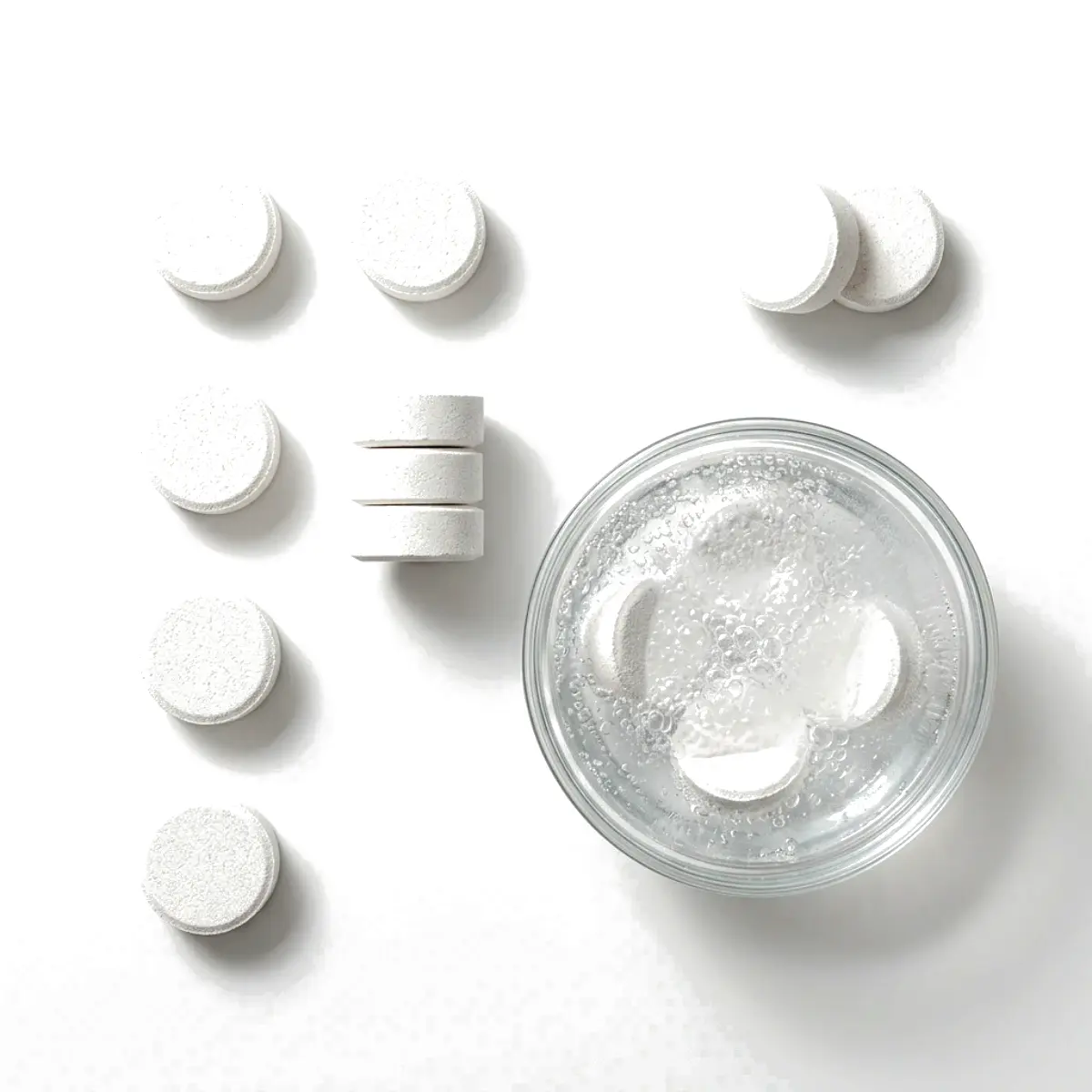

Press a cleaning or effervescent tablet under a few tons of force and you get something that survives a bumpy delivery truck. Push that force too far, though, and you've made a little ceramic puck that sits at the bottom of the glass, half-dissolved, long after you've lost patience. The point of pressing a tablet was never to make it as hard as possible — it was to find the hardness that gives a predictable dissolution time without the thing crumbling to powder on the shelf.
That tension is the whole story, and it's one a surprising number of buyers get backwards.
Key Takeaways
- Hardness and dissolution time are a trade-off, not a scoreboard — a harder tablet usually dissolves slower, not better.
- There's a sweet spot for compression force, not a "more is always better" scale.
- Changing the formula (disintegrants, binders) often beats simply pressing harder.
- Three tests together — hardness, disintegration, and friability — tell the real quality story.
- Moisture control and packaging keep dissolution consistent months after the tablet leaves the line.
Quick Definitions
Tablet hardness is a tablet's resistance to being crushed, measured on a tester in newtons (N) or the older kilopond (kp) scale. Dissolution (or disintegration) time is how long the tablet takes to fully break apart in water. The reason people confuse the two is that they pull in opposite directions: the denser you press a tablet to raise hardness, the harder it becomes for water to work its way inside and set it off.
Why This Keeps Coming Up Now
Blame the rise of "just add water." Waterless cleaners, dishwasher tabs, toilet-bowl fizzers, and effervescent household cleaners have moved from novelty to normal across North America, Europe, and the Middle East, partly because shipping a tablet is cheaper and lighter than shipping a bottle of mostly water.
With that growth came a familiar pair of complaints. One camp opens the box to find powder and broken halves. The other drops a tablet in a bowl and watches it refuse to disappear. Both problems trace back to the same decision made on the production line: how hard to press.
How a Tablet Actually Gets Its Hardness
Compression Force Is the Main Lever
A tablet press works like a very precise, very fast punch. Powder drops into a cavity, an upper and lower punch squeeze it, and out pops a compact. The more force those punches apply, the denser and harder the result — and the smaller the internal gaps water needs to flow through. That's the first and most obvious knob an operator can turn, which is exactly why it gets over-used.
What's Inside the Powder
Binders and Fillers
Binders are the glue that holds particles together once they're pressed. The tablet binder formulation matters because the same binder that gives you strength can also slow water uptake if you lean on it too heavily. A good formulator picks a binder that holds the tablet together at a lower compression force, so you aren't forced to over-press just to stop it falling apart.
The Effervescent Couple
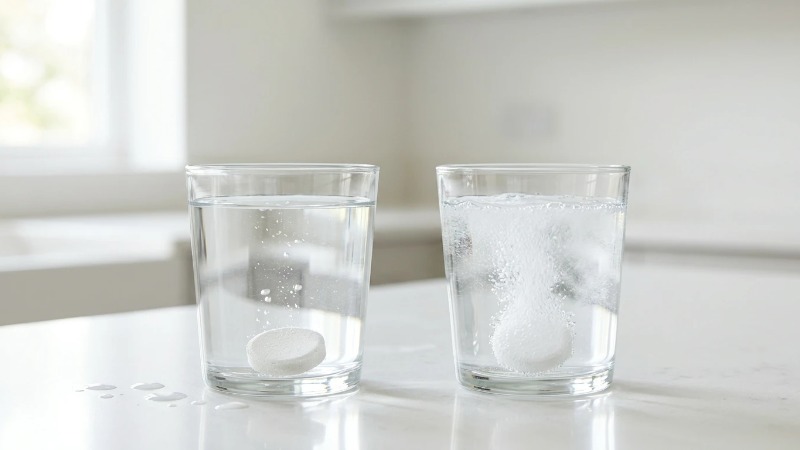
In fizzing tablets, the magic is a reaction between an acid (often citric or malic) and a carbonate source (usually sodium bicarbonate). Add water and they react, releasing carbon dioxide — those bubbles physically blow the tablet apart from the inside, which drives the effervescent tablet dissolution rate. The catch: that same couple reacts with ambient humidity. Under-protect it and the tablet slowly self-destructs in the pack before it ever reaches a customer.
Lubricants and Disintegrants
Lubricants (think magnesium stearate) keep powder from sticking to the punches and stop the press from jamming. But most lubricants are water-repellent. A pinch helps production run smoothly; a heavy hand coats every particle in something hydrophobic and quietly wrecks dissolution. Disintegrants do the opposite job — they swell or wick water in to pull the tablet apart faster.
The Core Trade-Off: Hardness vs. Dissolution Time
Why Harder Isn't Automatically Better
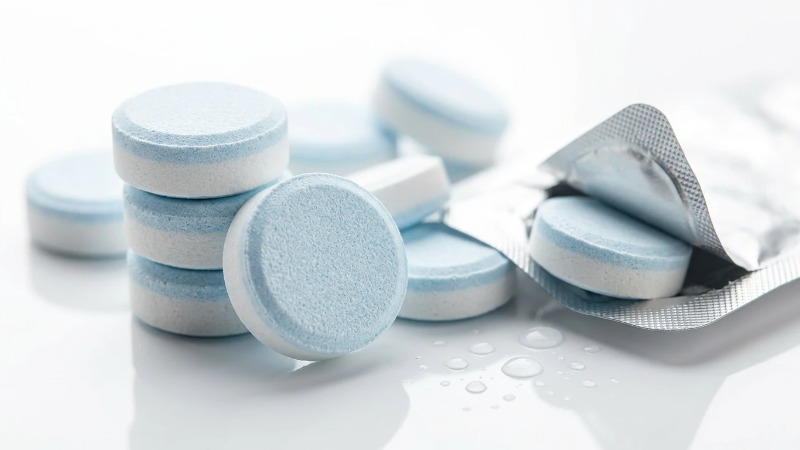
Here's the part people miss. Up to a point, more compression gives you a sturdier tablet with little cost to dissolution. Past that point, you start sealing off the internal channels that water needs, and dissolution time climbs steeply. Press even harder and strange things happen — trapped air can't escape, and the tablet "caps," meaning the top shears clean off like a bottle cap when it's ejected.
On a production floor this shows up in a way that's almost comical once you've seen it: an operator cranks the force to kill a dusting problem, the hardness readings look great on paper, and then QC drops a sample in a beaker and it's still a stubborn lump four minutes later. The fix usually wasn't more force. It was a touch less lubricant, or a better disintegrant, or a slightly different granule size.
Hardness Level vs. Real-World Behavior
| Hardness band | Typical feel | Dissolution speed | Friability / breakage risk | Best fit |
|---|---|---|---|---|
| Too soft | Crumbly, dusty | Fast | High | — |
| Low–mid | Firm but breakable | Fast–moderate | Moderate | Fast-acting tablets |
| Balanced (target) | Solid, survives transit | Moderate, predictable | Low | Most cleaning / effervescent tablets |
| Too hard | Dense, glassy | Slow / incomplete | Low, but may cap | — |
These bands are directional, meant to show the pattern — not fixed numbers, since the right values shift with formula, tablet size, and intended use.
How the Balance Is Measured and Controlled
Hardness Testing
A hardness (or crushing-strength) tester squeezes the tablet until it fractures and records the force. Operators pull samples at intervals and check them against an agreed range — not a single magic number, but a window the batch has to stay inside.
Disintegration and Dissolution Timing
This is where disintegration time optimization happens. Lab staff drop tablets into water held at a stated temperature, sometimes with gentle agitation, and time how long full breakdown takes. Water temperature is non-negotiable in the record, because the same tablet that vanishes in 90 seconds in warm water can take three times as long in cold tap water.
Friability Testing
Tablet friability testing uses a rotating drum that tumbles tablets for a set number of turns, mimicking the knocks of handling and shipping. You weigh the tablets before and after; the percentage lost tells you how well the edges and surfaces hold up. A low friability result is what stands between a neat box of tablets and a box of dust at the far end of the supply chain.
Which Test Catches Which Problem
| Test | What it measures | Problem it prevents |
|---|---|---|
| Hardness | Crush resistance | Crumbling, dusting |
| Disintegration / dissolution | Time to break down | "Won't dissolve" complaints |
| Friability | Edge and surface durability | Broken tablets in transit |
| Moisture / weight uniformity | Batch consistency | Batch-to-batch variation |
How Experienced Manufacturers Dial It In
Adjusting Compression Force in Small Steps
On a well-run automated line, cleaning tablet compression force gets nudged in small increments while hardness, disintegration, and friability are checked together. The aim is the lowest force that still passes friability — because every unnecessary newton you add is dissolution time you're giving away for nothing.
Formula Tweaks Instead of Brute Force
This is the dividing line between a factory that just runs a press and one that actually understands tablets. Rather than pressing harder to fix fragility, a skilled team adjusts the binder balance or adds a more effective disintegrant, so the tablet stays strong and breaks down quickly. It's slower, fussier work up front, and it's the reason two tablets that look identical can behave completely differently in water.
Humidity, Packaging, and Shelf Life
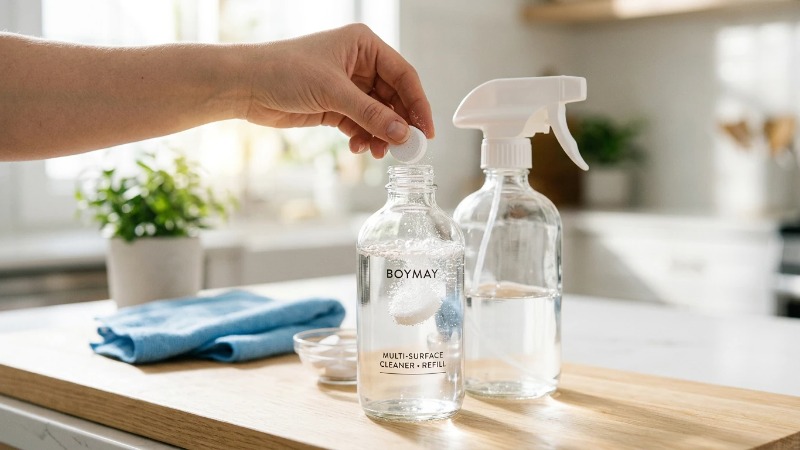
Because the effervescent couple reacts with moisture, controlling the air itself matters. Climate-controlled blending and pressing rooms, moisture checks on incoming raw material, and the right barrier packaging (foil wraps, desiccant, sealed tubes) are what keep a tablet dissolving the same way in month ten as it did on day one. This is exactly the kind of process discipline that GMP- and ISO-style quality systems are built to enforce.
What This Means for Buyers and Brands
If a supplier's spec sheet just says "hard tablet," it's telling you almost nothing useful. Hardness without a dissolution figure is a boast, not a specification.
When you're sourcing — especially for private-label or custom work — ask for four things together: a target dissolution time at a stated water temperature, a hardness range (not a single value), a friability result, and some evidence of consistency across batches. A manufacturer that can hand those over without flinching is one that actually controls its process. One that can't is guessing, and you'll find out the hard way.
A Forward Look
The category is tilting further toward concentrated and waterless formats, and with that shift, retailers are writing tighter dissolution specs into their contracts instead of leaving it to chance. The suppliers who win that work won't be the ones making the hardest tablet — they'll be the ones who can prove the balance with real test data, batch after batch.
Talk Specs, Not Slogans
If you're evaluating a tablet manufacturer, skip the adjectives and ask for the numbers that matter: target dissolution time at a named water temperature, a hardness range, and a friability result. At Boymay, custom samples and the test data behind them are what we'd rather be judged on — request a sample set and put the balance to the test yourself before you commit to a run.
FAQ
Q: Does a harder cleaning tablet last longer on the shelf?
A: Not really. Hardness helps a tablet survive handling, but shelf life depends far more on moisture protection and packaging. A moderately hard tablet in good foil will outlast a rock-hard one in a leaky pack every time.
Q: Why won't my tablet fully dissolve?
A: Usually one of four culprits: it was over-compressed, it has too much water-repellent lubricant, its disintegrant is too weak — or you're using cold water. Try warm water first; if it still struggles, the problem is in the tablet, not your sink.
Q: What counts as a good dissolution time?
A: It depends entirely on use. A quick-fizz toilet tablet and a slow-release dishwasher tab have very different targets. What matters is that the spec states a time and the water temperature it was measured at — a figure without a temperature is meaningless.
Q: Can a tablet be both strong and fast-dissolving?
A: Yes, and that's the entire point. It comes from smart formulation and controlled compression rather than brute force — pairing a good disintegrant with the minimum pressing force needed to pass durability tests.
Q: What is friability and why should I care?
A: Friability is how much a tablet sheds or chips when knocked around, measured by tumbling it in a drum and weighing the loss. Care about it because a tablet that aces every other test is still a failure if it arrives as crumbs.